Green Chemistry

Guidance on Key Considerations for the Identification and Selection of Safer Chemical Alternatives

This guidance was developed with the aim to advance broader agreement on a general approach and criteria for the selection of safer alternatives, with a focus on chemical substitution. It is intended to advance a consistent understanding of the minimum requirements needed to determine whether a chemical alternative is safer than the priority chemical, product, or technology for substitution, independent of the entity performing the assessment or the alternatives assessment framework being used. 
Green chemistry strategies in pulping and biomass valorization: toward a circular bioeconomy

The transition toward a circular bioeconomy demands innovative, sustainable, and efficient technologies for biomass valorization and pulping. Green chemistry strategies, particularly organosolvent pulping pretreatment, are emerging as pivotal solutions to unlock the full potential of lignocellulosic feedstocks. Organosolvent processes employ environmentally benign solvents to selectively fractionate biomass components, enabling the recovery of high-purity cellulose, hemicelluloses, and lignin with minimal environmental footprint.

Green recovery of amorphous silica from silicone waste: Alkali activation and thermal treatment

This study presents a green and sustainable method for recovering high-purity silica from solid silicone by-products derived from industrial silicone oil manufacturing through alkali-assisted sol–gel synthesis, with and without thermal treatment. Sodium hydroxide and sodium carbonate were used to evaluate the effects of alkali type, concentration, and calcination at 800 °C on silica yield, structure, and performance.

Landscape Analysis of Drivers, Enablers, and Barriers to Plasticizer Substitution

The goal of this report is to identify barriers and enablers to the adoption of green and sustainable chemistry that can be effectively leveraged to accelerate commercialization and adoption actions in the future. The report focuses on identifying factors that have led to the successful substitution of plasticizers in some product categories and to understand what is holding substitution back in others.

Apply for the Innovate! Call

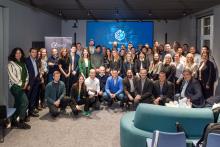
A unique opportunity to receive equity-free funding for up to 12 months while joining a lab-embedded program to fast-track the validation of green chemistry business models and technologies. The innovate! call is tailored for innovators worldwide: early-stage scientific spinouts, researchers with promising yet unused patents, and entrepreneurs seeking new technologies as a foundation for their next business. With guaranteed, furnished housing, and access to a vibrant innovation ecosystem, the future of green chemistry innovators starts in Berlin.