case studies

Advancing Sustainable Solutions Through Industry-Driven Research

Explore how cutting-edge research and industry collaboration in the global South are driving sustainable innovation in alignment with the UN Sustainable Development Goals. This GC&E Global session will feature leading experts sharing practical approaches to decarbonization, circularity, and bio-based systems. Through a short talk, an industry case study, and an interactive discussion, discover strategies for translating research into impactful solutions across global value chains.

Session Goals & Learning Objectives
Incentivizing Sustainable Chemicals: A Policy Framework for Innovation, Manufacturing, and Market Transformation (Research Report)

A research report titled Incentivizing Sustainable Chemicals: A Policy Framework for Innovation, Manufacturing, and Market Transformation, released by Change Chemistry and the Sustainable Chemistry Catalyst at the University of Massachusetts Lowell, outlines why government incentives are critical to helping businesses scale more sustainable chemicals — and how those incentives can reduce risk, unlock investment, and enable real market adoption.

Green Chemistry Toolkit Yale-UNIDO

The Green Chemistry Toolkit is an interactive learning resource developed as part of the Global Green Chemistry Initiative – a project led by the United Nations Industrial Development Organization (UNIDO) in partnership with the Center for Green Chemistry and Green Engineering at Yale. This resource aims to facilitate general global awareness and capacities to interested individuals from industry, the public sector, and academia alike.

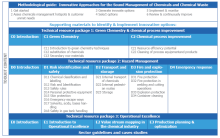
Innovative Approaches for the Sound Management of Chemicals and Chemical Waste (IAMC) Toolkit

The toolkit “Innovative Approaches for the Sound Management of Chemicals and Chemical Waste” (IAMC), developed in a framework of the UNIDO project*, aims to facilitate the implementation of innovations in the production and application of chemicals in order to reduce the consumption of chemicals, energy and water while improving the sound management of chemicals and reducing risks related to chemical accidents.