circular materials

From Raw Materials to Products: PHA & How It's Used in Certified Compostable Products

This webinar focuses on polyhydroxyalkanoates (PHA), an emerging class of certified compostable bioplastics that are expanding the possibilities for sustainable packaging and products. Learn how PHA materials are produced, their unique performance characteristics, and how they are being used in compostable applications today. Our panelists will discuss feedstocks, production processes, material innovations, and end-use products, while exploring the role PHA can play in advancing the circular economy. 

Brightlands Polymer Days 2026

Polymer Materials in Transition

Transitioning in Chemistry, Physics, Function and Society

Join leading minds from academia and industry at the heart of Europe’s innovation hub for a cutting-edge, international conference on polymer science and technology. From smart materials and sustainable solutions to biomedical breakthroughs and AI-powered innovation - this is where transitions happen.

Rapid Communication: Relating Sustainability Metrics to Evaluate Circularity and Material Efficiency

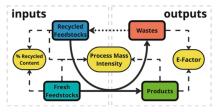
The rapid communication explores how to collect mass balance data (reagent amounts, products, waste) to generate metrics to evaluate material circularity and efficiency for chemical transformations. It explores the relationships between three simple metrics (process mass intensity, e-factor, and recycled content) to explore transformations holistically. There is a short case study exploring how these are applied to evaluate and compare different processes. 

Building a roadmap for safer and sustainable material chemistries: Addressing the PFAS problem through informatics and data-driven chemistry

Scientific research increasingly demonstrates that chemicals and materials essential for everyday products threaten natural systems and human health. Transitioning to sustainable, circular, and low-carbon economies depends critically on having safer chemicals available. We propose that materials scientists should also account the impact of the health hazards of chemicals associated with the synthesis, processing, and manufacturing of materials.