PFAS

INERIS Chemicals Substitution webpage
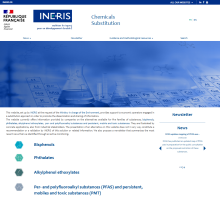
This webpage provides support to economic operators engaged in a substitution approach in order to promote the dissemination and sharing of information.
The page offers information provided by companies on the alternatives available for five families of substances:

  •  bisphenols,
  • phthalates,
  • alkylphenol ethoxylates,
  • per- and polyfluoroalkyl substances (PFAS) and
  • persistent, mobile and toxic substances. 

One can download summary tables on alternatives for each of these categories. There is also a newsletter.

The cost of PFAS pollution for our society

Per- and polyfluoroalkyl substances (PFAS) are persistent, bioaccumulative chemicals widely used in industry and consumer products, and now detected across environmental media and human populations. This study assesses the societal costs of PFAS pollution in the European Economic Area (EEA) under four hypothetical exposure scenarios: 1) business as usual (BAU) for emissions; 2) full compliance with the Drinking Water Directive (DWD); 3) full compliance with Environmental Quality Standards (EQS); and 4) a total ban on PFAS production and use.

Greener Curriculum Showcase Series: Exploring Sustainable Practices and the Drive for Greener Innovations - A Case Study in Metal Plating

This free, virtual workshop is designed to help educators effectively adapt and implement a new case study that examines the various considerations and factors driving greener innovations in the metal plating industry. One of the primary chemicals used in this sector is PFAS, which acts as a fume suppressant to control chromic acid mist during the chrome plating process. While PFAS reduces exposure to the known health hazard of hexavalent chromium, its health and environmental impacts raise significant concerns, underscoring the need for greener alternatives.

Building a roadmap for safer and sustainable material chemistries: Addressing the PFAS problem through informatics and data-driven chemistry

Scientific research increasingly demonstrates that chemicals and materials essential for everyday products threaten natural systems and human health. Transitioning to sustainable, circular, and low-carbon economies depends critically on having safer chemicals available. We propose that materials scientists should also account the impact of the health hazards of chemicals associated with the synthesis, processing, and manufacturing of materials.