ToxFMD Screened Chemistry Library
Tool Owner
The ToxFMD Screened Chemistry® Library (https://database.toxservices.com) contains GreenScreen® chemical hazard assessments for over 1000 chemicals
The ToxFMD Screened Chemistry® Library (https://database.toxservices.com) contains GreenScreen® chemical hazard assessments for over 1000 chemicals
The hazard identification of chemicals is a key step of the “Safe and Sustainable by Design” (SSbD) framework introduced by the European Commission, aiming to eliminate hazardous substances early in innovation. In this context, in silico methods such as (Quantitative) Structure–Activity Relationship ((Q)SAR) models offer rapid, cost-effective, and animalfree alternatives for early-stage hazard screening. The Partnership for the Assessment of Risks from Chemicals (PARC) is developing a toolbox to facilitate SSbD assessments containing numerous (Q)SAR models.
The Society of Toxicology's Sustainable Chemicals through Contemporary Toxicology Specialty Section, Occupational and Public Health Specialty Section and the Women In Toxicology Special Interest Group is co-hosting a webinar! Tune in to learn more about professional groups focused on sustainable chemicals with our distinguished panel of speakers:
🔹 Colleen McLoughlin, Ph.D.,DABT, E.R.T., representing the Society of Environmental Toxicology and Chemistry (SETAC)’s Advancement and Application of Alternatives Assessment Interest Group (A4-IG),

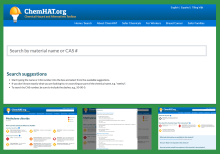
ChemHAT is a free, internet-based database that provides accessible chemical hazard information to help workers, families, and communities protect themselves from harmful chemical exposures.
Built on the principle that knowledge drives protective action, ChemHAT goes beyond traditional exposure controls. Rather than asking "What PPE or engineering controls are needed to make exposure 'safe'?", ChemHAT is designed to answer a more fundamental question: "Is there a way to get this job done without known hazardous chemicals?"
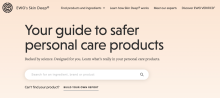
Your guide to safer personal care products. Backed by science. Designed for you. Learn what’s really in your personal care products.
We compare the ingredients on personal care product labels and websites to the information in nearly 60 toxicity and regulatory databases. Then we give every product and ingredient in the database a two-part score – one for hazard and one for data availability.
The Design for the Environment (DfE) Program at the U.S. Environmental Protection Agency developed the Alternatives Assessment Criteria for Hazard Evaluation as a transparent tool for evaluating and differentiating among chemicals based on their human health and environmental hazards. The Criteria are applied in all of DfE Alternatives Assessments and can be used by other organizations.
To ensure that the Criteria remain relevant and useful for distinguishing among chemicals, DfE may update criteria based on experience conducting alternatives assessments and on stakeholder input.
GreenScreen for Safer Chemicals® (“GreenScreen”) is a chemical hazard assessment methodology.
The guidance provided in this publication clearly outlines every step for performing GreenScreen assessments, including how to assess and classify hazards, derive GreenScreen Benchmark™ scores and GreenScreen List Translator™ scores, and make informed decisions.