Free Classroom Access to Chemical Hazard Data -- NextGenChem
Type of Announcement

Keywords

The Open (Quantitative) Structure-activity/property Relationship App (OPERA) is a free and open-source/open-data suite of QSAR models providing predictions for toxicity endpoints and physicochemical, environmental fate, and ADME properties. OPERA was created in alignment with rigorous OECD standards to provide a regulatory-oriented alternative to experimental measurements. All OPERA models were built on curated data and QSAR-ready chemical structures standardized using an open-source workflow implemented in the application. Models are explained in the 2018 publication by Mansouri et.
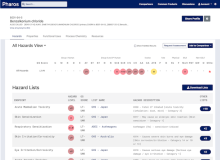
Pharos provides resources to assess human and environmental health hazards of chemicals and building materials, and tools to collaborate to find safer alternatives. Products listed in the Pharos database are evaluated based on a range of criteria, including their potential impacts on human health (e.g., toxicity, emissions), environmental impact (e.g., resource depletion, energy use), and overall sustainability performance. The Pharos Project promotes transparency by providing clear and accessible information about the materials listed in its database.
The DOZN™ tool is a quantitative, industry-first tool that uses the 12 principles of green chemistry for comparing the relative greenness of similar chemicals, synthetic routes, and chemical processes. We distill these 12 Principles of Green Chemistry into three major categories: improving resource use, more efficient use of energy, and minimizing human and environmental hazards.
The game was designed to introduce students to safer chemical design concepts that are focused on the manipulation of molecule parameters in order to minimize the undesired biological and environmental interactions of a hypothetical commercial chemical. The game scenarios model the decision making process used by professionals to design a new chemical. Critically, the computer game simulates the real-world constraints that may affect chemical product development as the student designs a novel product.