Principal Scientist, AI and ML Discovery Platforms
Type of Announcement
Keywords
Most contemporary chemical processes rely on non-renewable resources and reagents associated with negative impact on environment and human health. As a result, the safe-and-sustainable-by-design (SSbD) framework is launched to guide the innovation towards safe and sustainable materials and chemical products. Bisphenol A (BPA) is a widely used chemical in the production of plastics but known to activate oestrogen receptors and linked by numerous studies to adverse effects on both human health and the environment.
The NCCC attracts about 500 participants, including around 100 scientists from industry. The meeting comprises plenary and keynote lectures by invited speakers, and selected oral papers and posters. Keynote and plenary speakers for 2026 can be found on the home page. Scientists, and especially PhD-students, are encouraged to submit abstracts so they can present their work, discuss it with leading scientists and representatives from industry.

The Open (Quantitative) Structure-activity/property Relationship App (OPERA) is a free and open-source/open-data suite of QSAR models providing predictions for toxicity endpoints and physicochemical, environmental fate, and ADME properties. OPERA was created in alignment with rigorous OECD standards to provide a regulatory-oriented alternative to experimental measurements. All OPERA models were built on curated data and QSAR-ready chemical structures standardized using an open-source workflow implemented in the application. Models are explained in the 2018 publication by Mansouri et.
Many organic molecules are efficient light emitters used for optoelectronic devices such as OLEDs, due to their advantages over metallic counterparts, including lower toxicity, simpler disposal, and sustainability. However, the methodologies commonly used in organic synthesis to obtain these molecules often rely on harsh conditions and generate large amounts of waste, making them both ineffective and inefficient. This work aligns with some of the principles of green chemistry across different stages.
Ice formation remains a critical challenge across multiple industries, posing safety risks, economic burdens, and, in extreme cases, fatalities. Effective anti-icing strategies are essential to mitigate these issues, yet the demand for environmentally friendly, cost-effective, and efficient solutions persists. Natural deep eutectic solvents (NADES) have emerged as a promising low-toxicity alternative for addressing ice formation.
Neglected tropical diseases, such as Chagas disease caused by Trypanosoma cruzi, remain a critical global health problem, particularly in underprivileged communities. Our research aims to develop potential therapeutic agents by synthesizing and characterizing analogues of aureothin, a polyketide with known antiparasitic activity.
A novel statistical correlation method, MM-DP4+, was developed to enhance NMR-based molecular structure elucidation by significantly reducing computational costs through the use of MM-optimized geometries. A comprehensive evaluation of 36 theory levels identified SMD/ωB97XD/6-31+G**//MMFF as the most accurate and cost-effective approach, achieving 91% accuracy in stereochemical assignments. A Python-based software, DP4+App, was created to streamline the implementation of DP4+, MM-DP4+, and customizable DP4+ calculations via a user-friendly interface.
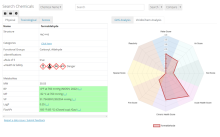
ViridisChem has built one of the largest and most comprehensive chemical databases and an in-silico data generator with a focus on toxicity of chemicals. The Chemical Analyzer tool offers critical information to help define safer-greener and sustainable product development.
Here are some powerful features we have added to our product Chemical Analyzer: