Catalysis

NCCR Catalysis Boost Fellowship for Female PhD students
Chemistry and catalysis impact our daily lives and are popular areas of study at the undergraduate level. In Switzerland, however, there is a sharp drop in female representation at the PhD level and beyond. With the Boost Fellowship, we aim to support prospective female PhD researchers with outstanding academic achievements. The fellowship provides successful applicants with the opportunity to pursue a PhD within one or more research groups associated with NCCR Catalysis, with first-year funding provided by the program.
Global GreenChem Toolkit
This toolkit has a number of different modules ranging from an overview of sustainability, the 12 principles of green chemistry, real world examples and case studies to using biomimicry as an innovation driver, regulations and international conventions and chemical substitution and alternatives assessment.
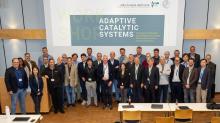
Highlights from the Adaptive Catalytic Systems' Workshop at the Max Planck Institute for Chemical Energy Conversion
Type of Announcement
Mechanochemical lindane removal: investigating the self-healing potential of soil
In this study, mechanochemical lindane removal from river sediment in Serbia’s Pannonian Plain’s Tamiš River and forest soil from Golija National Park was investigated. For comparison, artificial soils were used, where SSB simulated clay soil and SSS simulated sandy soil. Real and synthetic samples were subjected to physical processing in a high-energy planetary ball mill under atmospheric pressure. The effect of mechanochemical treatment on lindane removal was explored by varying the milling speed (150–350 rpm) at a constant milling time and lindane concentration (0.15–0.35 mg/L).
ACS GCI Pharmaceutical Roundtable - Key Research Area Grants
These grants are open to applicants from any country.
The ACS GCI Pharmaceutical Roundtable identifies key research areas representing the pharmaceutical industry’s perspective on where advances in understanding would be most likely to yield more sustainable chemistries and processes of interest to pharma and allied industries. From these areas, the GCIPR selects a handful each year for Key Research Area Grants—currently a $80,000 award for a 12-month research commitment. Grant winners work closely with the GCIPR focus team that proposed the grant topic.
Sulfur-Mediated Multicomponent Reactions in the Synthesis of Thioamides
Thioamides are versatile tools that are used both as synthetic precursors to complex heterocyclic compounds, and also commercially due to their range of bioactive properties. These include antimicrobial, antioxidant and most notably antithyroid activities among others. Traditional synthesis of thioamides typically employ the use of smelly, multi-step protocols with poor atom economy and cumbersome clean-up. Furthermore, these protocols utilize harsh reaction conditions, long reaction times, limited scope and poor waste management.
Applications of Lewis Acidic [ZnCl2]2[ChCl] Deep Eutectic Solvents (DES) in the Synthesis of Unsymmetrical Ethers via Dehydrative Cross Etherification of Alcohols
Unsymmetrical ethers are generally synthesized via the Williamson ether method, but the unwanted formation of symmetrical ethers plus the basic and harsh conditions of the route pose a synthetic challenge. Other methods employed in the synthesis of unsymmetrical ether require the use of toxic mineral acids, and requires high catalyst loading which limits their large-scale application. Dehydration of alcohols in the presence of base-metal catalyst has, however, recently offered the greenest approach to synthesize unsymmetrical ethers, leaving water as by-product.