Tools & Metrics

Results are displayed in alphabetical order by title. Use the search bar to refine results. Text searches are full text, not partial word searches. Do you have a tool to share with the green chemistry community? Click the button. If you are not already logged in, you will be re-directed to login first. All new submissions are automatically directed to site administration for approval to post.
Displaying 41 - 50 of 67

Innovative Approaches for the Sound Management of Chemicals and Chemical Waste (IAMC) Toolkit
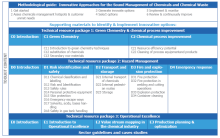
The toolkit “Innovative Approaches for the Sound Management of Chemicals and Chemical Waste” (IAMC), developed in a framework of the UNIDO project*, aims to facilitate the implementation of innovations in the production and application of chemicals in order to reduce the consumption of chemicals, energy and water while improving the sound management of chemicals and reducing risks related to chemical accidents.  

MedChem Tips and Tricks

Produced by the medicinal chemistry focus team of the ACS GCI Pharmaceutical Roundtable, this quick tips guide covers purification, solvent selection, reagents, energy, and resources to make medicinal chemistry more sustainable.

openLCA

Tool Owner

OpenLCA is a free, powerful, open-source software for performing Life Cycle Assessments (LCA) and footprinting, allowing users to analyze the environmental impacts of products and processes across their entire lifecycle.

OPERA: Open (Quantitative) Structure-activity/property Relationship App

The Open (Quantitative) Structure-activity/property Relationship App (OPERA) is a free and open-source/open-data suite of QSAR models providing predictions for toxicity endpoints and physicochemical, environmental fate, and ADME properties. OPERA was created in alignment with rigorous OECD standards to provide a regulatory-oriented alternative to experimental measurements. All OPERA models were built on curated data and QSAR-ready chemical structures standardized using an open-source workflow implemented in the application. Models are explained in the 2018 publication by Mansouri et.

P-A-R-C Safe and Sustainable by Design (SSbD) Toolbox

The P-A-R-C SSbD Toolbox is a structured collection of tools to support designers, developers, risk assessors of chemicals and materials from industry, academia and governments in addressing questions about functionality, chemical safety and environmental sustainability. In addition the toolbox will in time cover socio-economic aspects to support the exploratory work on a potential 5th step of the framework.

The goals of the toolbox are to provide:

→ A structured inventory and overview of tools suited for SSbD assessment and (re-)design;

Path2Green

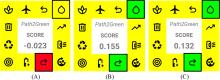
Approach to address the pressing need for efficient and transparent evaluation techniques to assess extraction processes’ sustainability. In response to society's growing demand for natural products and the consequent surge in biomass exploration, a critical imperative arises to ensure that these processes are genuinely environmentally friendly. Extracting natural compounds has traditionally been regarded as a benign activity rooted in ancient practices. However, contemporary extraction methods can also significantly harm the environment if not carefully managed.

PFAS Reporting Information System for Manufacturers (PRISM)

The IC2 provides an online portal for manufacturers to report on the presence of intentionally added per- and polyfluoroalkyl substances (PFAS) in products. The PFAS Reporting Information System for Manufacturers (PRISM) is based on the successful IC2 High Priority Chemicals Data System (HPCDS) and establishes a framework for implementation of similar reporting programs at a greatly reduced cost.