Tools & Metrics

Results are displayed in alphabetical order by title. Use the search bar to refine results. Text searches are full text, not partial word searches. Do you have a tool to share with the green chemistry community? Click the button. If you are not already logged in, you will be re-directed to login first. All new submissions are automatically directed to site administration for approval to post.
Displaying 51 - 60 of 67

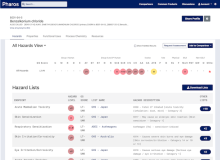
Pharos

Tool Owner

Pharos provides resources to assess human and environmental health hazards of chemicals and building materials, and tools to collaborate to find safer alternatives. Products listed in the Pharos database are evaluated based on a range of criteria, including their potential impacts on human health (e.g., toxicity, emissions), environmental impact (e.g., resource depletion, energy use), and overall sustainability performance. The Pharos Project promotes transparency by providing clear and accessible information about the materials listed in its database.

Process Mass Intensity Calculator

Decreasing the overall quantity of materials used to manufacture a final product is a significant challenge for pharmaceutical companies. Because of the large amount of solvent used in typical manufacturing processes, decreasing materials used saves companies money (less purchased and less energy used in workup and isolation). The Process Mass Intensity (PMI) metric was developed as a way to benchmark and quantify improvements towards greener manufacturing processes.

Process Mass Intensity Life Cycle Assessment (PMI-LCA) Tool

The PMI-LCA Tool is a high-level estimator of Process Mass Intensity (PMI) and environmental life cycle information that can be customized to fit a wide variety of linear and convergent processes for synthesis of small molecule active pharmaceutical ingredients (APIs). An ecoinvent dataset is utilized as the source of the life cycle impact assessment (LCIA) data.

PMI-LCA Tool Quick-Start Guide

Process Mass Intensity Prediction Calculator

The Process Mass Intensity (PMI) Prediction Calculator was created by the ACS GCI Pharmaceutical Roundtable member companies, with leadership from Bristol-Myers Squibb, to predict a range of probable process efficiencies of proposed synthetic routes at various phases of drug development. The tool uses historical PMI data from multiple pharmaceutical companies and predictive analytics (Monte Carlo simulations) to estimate the probable PMI ranges.

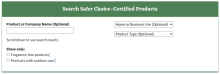
Products that are Safer Choice-certified

Looking for safer cleaning and other products? Use the link below to find products that meet the Safer Choice Standard.

What does the Safer Choice label mean?

Participation in the Safer Choice program is voluntary. Companies who make products carrying the Safer Choice label have invested heavily in research and reformulation to ensure that their products meet the Safer Choice Standard. These companies are leaders in safer products and sustainability.

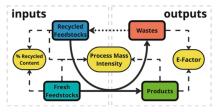
Rapid Communication: Relating Sustainability Metrics to Evaluate Circularity and Material Efficiency

The rapid communication explores how to collect mass balance data (reagent amounts, products, waste) to generate metrics to evaluate material circularity and efficiency for chemical transformations. It explores the relationships between three simple metrics (process mass intensity, e-factor, and recycled content) to explore transformations holistically. There is a short case study exploring how these are applied to evaluate and compare different processes. 

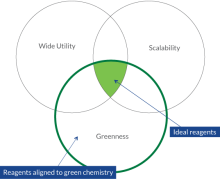
Reagent Guides

The reagent guides purpose is to encourage chemists to choose a ‘greener’ choice of reaction conditions. The guides aim to achieve this by providing transparency through the use of Venn diagrams in addition to improving understanding by discussion and up to date references.

In line with the green chemistry roundtables core values, these guides aim to assist chemists in making informed decisions when picking the most sustainable reagent for any transformation at hand.

Safer Chemical Design Game

The game was designed to introduce students to safer chemical design concepts that are focused on the manipulation of molecule parameters in order to minimize the undesired biological and environmental interactions of a hypothetical commercial chemical. The game scenarios model the decision making process used by professionals to design a new chemical. Critically, the computer game simulates the real-world constraints that may affect chemical product development as the student designs a novel product.